
A backyard fire pit adds warmth and pulls people together once the sun goes down, but the best ones do more than throw off heat. Through a New England summer, most homeowners want a space that feels open and comfortable, one that is easy to gather around without getting too hot or too crowded. Good fire pit design starts there. It matches placement, seating, materials, and comfort features to how your family actually spends its evenings, so the space supports real conversation, moves well, and connects naturally to the patios, walkways, gardens, and outdoor kitchens around it.
From here, a few key design choices decide whether your fire pit becomes a true gathering spot or an afterthought in the corner of the yard. The first one is where it goes.
Start With Fire Pit Placement and Backyard Flow
Placement is the first decision, and it shapes everything that follows. The best spot feels easy to reach, comfortable to sit around, and visually tied to the rest of your yard, which is rarely the middle of the lawn. More often, a fire pit works better near a patio, along a garden edge, or in a separate lounge area that still reads as part of your home.
A few things are worth weighing before you settle on a spot:
- How people move from the house to the fire pit
- Whether it connects to an existing patio or walkway
- How much privacy the space offers
- What guests will see while seated
- How the sunset and evening breezes affect comfort
- Whether the area feels open without feeling exposed
Sightlines matter as much as the seating itself. A fire pit you can see from the kitchen window or back door tends to get used far more often, and a clear walkway or hardscaped path keeps it easy to reach on a dark evening. Setting the pit a safe distance from the house and anything that can catch, and out of the direct path of the wind, protects both comfort and safety. When it is planned this carefully from the start, a well-built outdoor fire pit becomes a natural anchor for the whole space rather than something squeezed into a corner after the fact.
Design Seating For Better, More Natural Conversations
Seating is where fire pit design becomes real for the people using it. The layout should feel relaxed and open, giving everyone room to sit, shift, and talk without the space feeling tight. How you arrange it depends less on the pit itself and more on how you actually gather.
Here is how the common seating layouts compare:
| Seating Layout | Best For | Design Consideration |
|---|---|---|
| Circular Seating | Larger gatherings | Creates a strong gathering area but needs more space |
| Semi-Circular Seating | Open lounge areas | Keeps one side open for guest entry and movement |
| Built-In Seat Walls | Defined hardscape spaces | Adds structure and can reduce furniture needs |
| Movable Lounge Chairs | Flexible hosting | Allows homeowners to adjust the space as needed |
| Outdoor Sofas and Chairs | Relaxed summer evenings | Feels comfortable but needs enough patio surface |
The right choice comes down to how often you host. If people are over regularly and the group size changes, flexible seating works best. A smaller yard often benefits from a built-in seat wall, which defines a backyard fire pit design and keeps the area tidy without crowding it with furniture.
Choosing Materials That Support Comfort, Style, and New England Summer
Materials shape both how a fire pit looks and how it holds up. The goal is not to match everything exactly, but to coordinate textures, colors, and shapes so the area feels intentional. Natural stone brings a rustic, grounded look that reads as timeless, while pavers offer flexible shapes and colors for a cleaner, more structured surface. Cut bluestone set on compacted gravel adds crisp, modern lines, and gravel accents soften the edges while helping the area drain. Stone seat walls do double duty, defining built-in seating and keeping the space tidy, and a well-placed walkway ties the whole fire pit design back to your home and the rest of the yard.
Material choice matters even more in a New England climate. Brick fire pit designs, for example, hold heat well and suit the traditional homes common across the South Shore, but only when they sit on a properly compacted base built to handle the freeze-thaw cycles that shift and crack poorly set stone over the winter. When materials are chosen with both the look and the local weather in mind, they become a lasting part of your outdoor living space rather than something you are repairing a few seasons later.
Lighting Features That Keep Your Fire Pit Usable After Sunset
Firelight sets the mood, but it should not be the only light in the space. Good fire pit design plans for practical lighting too, so guests can move around safely once it gets dark without leaning on a phone flashlight. The trick is to layer a few soft sources rather than flooding the area with one bright one.
- Path Lighting: Low fixtures that guide the walkway to the fire pit, so the route stays clear after dark.
- String Lights or Lanterns: Warm-toned light around the perimeter for an ambient, cozy glow.
- Indirect Seating Light: Soft, low-glare fixtures near the seating area instead of harsh overhead lighting.
- Step Lights: Small lights for stairs or changes in ground level where footing gets tricky.
- Seat Wall Lights: Low lighting tucked into built-in stone walls to keep edges visible and safe.
The best lighting is soft and layered. It should guide how people move through the space without overpowering the fire or washing out the glow that makes the area feel inviting in the first place.
For summer evenings, keep it low and let the fire do most of the work.
Plan for Shade, Airflow, and Summer Evening Comfort
A fire pit built only for cool spring nights tends to sit unused once the hottest stretch of summer arrives. Planning a nearby patch of shade, whether from a pergola, a large umbrella, or existing trees, gives your family a reason to gather earlier in the evening instead of waiting for the heat to break.
Airflow matters just as much. A fire pit boxed in against a fence or wall traps heat and smoke, and on a warm July night that is enough to send everyone back inside. Leaving at least one side of the seating area open lets the breeze move through, which keeps your whole outdoor space comfortable no matter what the summer throws at it.
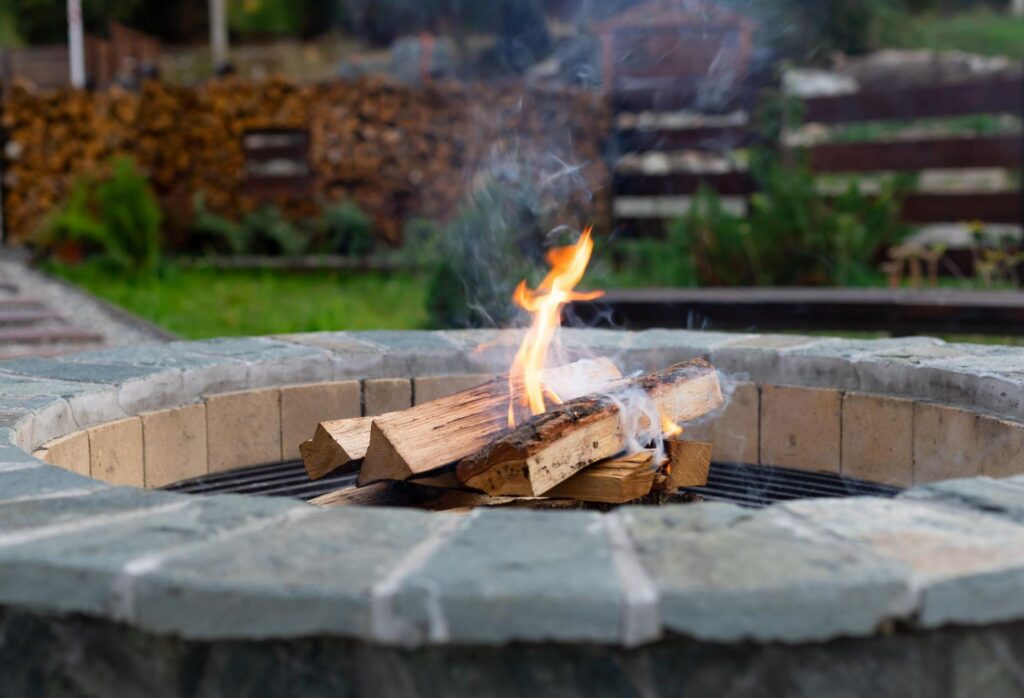
Connect the Fire Pit Design to Your Outdoor Living Space
The best backyard designs with a fire pit treat it as part of the whole yard, not a standalone feature parked off to the side. When the fire pit ties into your outdoor patio, outdoor kitchen, dining area, garden path, or lawn, the space reads as a set of connected zones rather than a scattered collection of pieces. That sense of flow is what separates a thoughtful outdoor fire pit design from one that feels like an afterthought.
A cohesive layout usually pulls together a few of these elements:
- A walkway linking the patio to the fire pit
- Matching or complementary hardscaping materials
- Planting beds that gently guide how people move
- A seat wall that ties into nearby retaining walls
- Ambient lighting that carries from one area to the next
- A layout that supports both dining and lounging
Handled this way, a fire pit becomes an easy, natural part of your outdoor living space. Guests can drift from dinner to the fire without crossing a dark stretch of lawn or feeling cut off from the rest of the yard, and the whole backyard ends up being used more, not less.
When a Professional Fire Pit Design Makes a Difference
A small, portable wood-burning fire pit can be a reasonable weekend build for a hands-on homeowner. Once the project grows past that, though, a few details are easy to get wrong without experience, and they are expensive to fix later. It is worth bringing in an experienced team when your fire pit involves:
- A gas line that has to be run to code
- Built-in seat walls or a retaining structure
- Drainage work or a yard that is not level
- A base that has to survive New England freeze-thaw winters
These are the parts that decide whether a fire pit holds up or starts shifting after a season or two. A professional hardscaping team gets the base depth, layout, and local requirements right the first time, so the finished space fits the rest of your yard and lasts.
How do I design a fire pit area?
Start with placement, choosing a spot that connects to your patio or walkway and feels tied to the rest of the yard. From there, plan your seating layout, pick materials suited to New England winters, and add layered lighting for after dark. Designing around how your family actually uses the space is what keeps the fire pit from feeling like an afterthought.
Which is the best type of fire pit to use, gas or wood?
Wood-burning fire pits give you a classic look and a lower upfront cost, but they need more cleanup and space to store fuel. Gas fire pits light instantly, produce less smoke, and suit anyone who wants an easy fire on a weeknight. The right pick comes down to how often you will use it and how much upkeep you want to take on.
Do I need a permit to build a fire pit in Massachusetts?
For a simple recreational or cooking fire pit at a single-family home, Massachusetts usually does not require a special permit, though your fire still has to follow local size, clearance, and attendance rules. Burning brush or yard debris is different, falls under state open burning rules, and needs a seasonal permit. Rules vary by town, so always check with your local fire department first.
How far should a fire pit be from my house?
Most guidance recommends keeping a fire pit at least 10 feet from your home, other structures, and anything that can catch, and out of the direct path of the wind. Many local fire codes go further, often requiring 25 feet for recreational fires, so confirm the exact distance with your town before you build.
Fire Pit Design FAQs
How do I design a fire pit area?
Start with placement, choosing a spot that connects to your patio or walkway and feels tied to the rest of the yard. From there, plan your seating layout, pick materials suited to New England winters, and add layered lighting for after dark. Designing around how your family actually uses the space is what keeps the fire pit from feeling like an afterthought.
Which is the best type of fire pit to use, gas or wood?
Wood-burning fire pits give you a classic look and a lower upfront cost, but they need more cleanup and space to store fuel. Gas fire pits light instantly, produce less smoke, and suit anyone who wants an easy fire on a weeknight. The right pick comes down to how often you will use it and how much upkeep you want to take on.
Do I need a permit to build a fire pit in Massachusetts?
For a simple recreational or cooking fire pit at a single-family home, Massachusetts usually does not require a special permit, though your fire still has to follow local size, clearance, and attendance rules. Burning brush or yard debris is different, falls under state open burning rules, and needs a seasonal permit. Rules vary by town, so always check with your local fire department first.
How far should a fire pit be from my house?
Most guidance recommends keeping a fire pit at least 10 feet from your home, other structures, and anything that can catch, and out of the direct path of the wind. Many local fire codes go further, often requiring 25 feet for recreational fires, so confirm the exact distance with your town before you build.
Plan a Fire Pit Design That Fits Your Backyard and Summer Routine
The difference between a fire pit that gets used all season and one that sits empty usually comes down to the planning behind it. When the whole space is designed together rather than added piece by piece, it feels natural to gather in and it holds up through New England winters instead of needing repairs a few years in.
If you are picturing a fire pit for your own yard, or want an existing one to feel more connected to the rest of your outdoor space, our team can help you plan it from design through build. JRD Landscape Design works with homeowners across the South Shore to shape backyards that are cohesive, well-built, and ready to enjoy.