
July 2026 brought a heat wave the South Shore was not ready for. Boston officially hit 100°F on back-to-back days for the first time since 1944, according to the National Weather Service. For a lot of homeowners around here, that turned the patio from a favorite summer spot into a space that got wicked hard to use.
If your patio has started to feel more like a hot plate than a place to relax, you are not alone. Patios with certain materials, layouts, and long sun exposure stay hot longer and keep releasing warmth into the surrounding seating and dining areas. Understanding how to keep a patio cool in summer starts with knowing what makes a yard hold heat in the first place.
JRD Landscape Design walks you through why patios overheat, which materials handle the sun better than others, and how thoughtful landscape design can turn a hot backyard into a usable space your family wants to stay in all summer.
Why Is My Patio So Hot?
Your outdoor patio gets hot because hard paving soaks up sunlight all day and holds that heat longer than the grass and soil around it. A few conditions decide how hot it gets and how long it stays that way:
- Long sun exposure: South- and west-facing patios receive direct sun throughout the hottest part of the day.
- Dark paving: Dark, dense surfaces absorb and hold more solar heat than lighter materials.
- Too much hardscape: Large paved areas collect and release more heat than lawns or planting beds.
- Reflected heat: Windows, siding, walls, fences, and nearby walkways can direct warm sunlight toward your patio.
- Limited shade: With little or no shade, the surface bakes in direct sun for hours with nothing to block it.
- Restricted airflow: Solid fencing, walls, or dense screening can leave the patio feeling enclosed, tight, and still.
Patio materials also decide how much heat a surface absorbs during the day and holds into the evening. According to the U.S. Environmental Protection Agency, paved surfaces can reach 120°F to 150°F under the summer sun, and hard surfaces can run 50°F to 90°F hotter than the surrounding air.
Which Patio Materials Get the Hottest and Coolest?
The coolest patio materials are lighter, less dense options like light-colored pavers, travertine, and limestone, which reflect more sunlight and hold less heat than dark, dense surfaces. Dark, dense, and unshaded materials get the hottest and stay warm the longest. On the South Shore, any material can feel warm after hours of direct sun, so here is how the common options behave in the heat and how the right design helps:
| Patio Material | General Heat Behavior | Design Consideration |
|---|---|---|
| Standard Concrete | Heats quickly, holds heat well into the evening | Works best when paired with shade or a lighter surface finish, and needs proper base prep to resist frost heaving |
| Dark Bluestone | Can be very hot under direct sun | Brings a classic New England look and works best on a patio with planned shade |
| Dark Concrete or Pavers | Absorbs and retains considerable heat | Consider a lighter color or finish |
| Light-Colored Pavers | Generally absorb less solar heat | Cooler underfoot, though lighter colors can show glare and staining |
| Porcelain Pavers | Heat absorption can vary depending on the color and finish | Pale options may offer a cooler surface |
| Travertine | Often comes in lighter tones that absorb and hold less heat | Product and finish should suit your property, and quality travertine handles New England freeze-thaw well when sealed |
| Limestone | Lighter varieties can reflect and absorb less heat | Consider durability and maintenance |
Careful material selection is one of the most essential conversations before designing and installing a patio. A material that may look great in a showroom can still perform differently after sitting under the sun in your backyard in Hingham or Norwell.
How Do I Add Shade to a Hot Patio?
To cool a hot patio, add shade over the areas that get the most sun during the hours you actually use the space. According to the U.S. Environmental Protection Agency, shade from trees and vegetation can keep a surface 20°F to 45°F cooler than the same surface sitting in direct sun. For a homeowner, that is the difference between a patio you use and one you avoid.
On the South Shore, planting canopy trees, adding a pergola, building a pavilion, and layering shade with plants are all proven ways to keep a patio cool through summer.
Plant Canopy Trees
Canopy trees spread a broad layer of leaves over your patio, cooling the space with natural shade while helping it feel connected to the rest of the landscape. Deciduous trees, the kind that drop their leaves in fall, block the strong summer sun when their leaves are full and let more light through once the leaves fall. Good choices for New England yards include red maple, sugar maple, and honeylocust. When you place a tree, account for its mature size, root spread, drainage, and nearby structures, and plan for the few years it takes the canopy to fill in.
Add a Pergola for Shade
A pergola creates filtered shade and adds character to an outdoor dining or seating area. The direction it faces and the spacing between its rafters decide how much shade it provides. A pergola with wide-spaced rafters may not fully block the low western sun, so it often works best paired with planting, screening, or an adjustable canopy. JRD builds pergolas and pavilions as part of full outdoor living spaces designed for real summer comfort.
Build a Pavilion
A pavilion gives your patio more complete overhead coverage, which suits dining, cooking, or gathering areas that need full protection from the sun. Because it has a stronger visual presence than a pergola, plan it around your patio’s scale, your home’s style, and how people move through the yard.
Layer Shade and Planting
One shade feature can help, but South Shore homeowners often layer a few together to solve the heat for the whole space. A pavilion can cover the dining table while a nearby tree shades the patio edge and shrubs screen the low afternoon sun. Layering these elements gives better coverage and keeps the backyard looking balanced and connected.
What Else Cools Down a Hot Backyard?
Thoughtful planting, good airflow, balanced hardscape, and overhead shade all work together to cool a hot backyard on the South Shore.
- Trees and Plantings: Placing trees and plants around your patio lowers the surrounding air temperature by 2°F to 9°F at the peak of summer, according to EPA research, cooling more than just the surface underfoot.
- Patio Placement: The right location of an outdoor patio influences how much direct sun and afternoon heat it takes on.
- Wind Direction: Design a patio layout that works with prevailing wind patterns, bringing in natural airflow instead of blocking it. Layered planting and intentional openings help provide screening while still having space for wind to flow through.
- Reflected Heat: Nearby glass, siding, masonry, and fences bounce extra heat onto your patio. Trellises and planting beds act as a buffer between those hot surfaces and your seating area.
Together, these factors help shape how comfortable your whole backyard feels. Planning each one alongside your patio material and shade choices transforms a yard into a space your family can actually enjoy all summer.
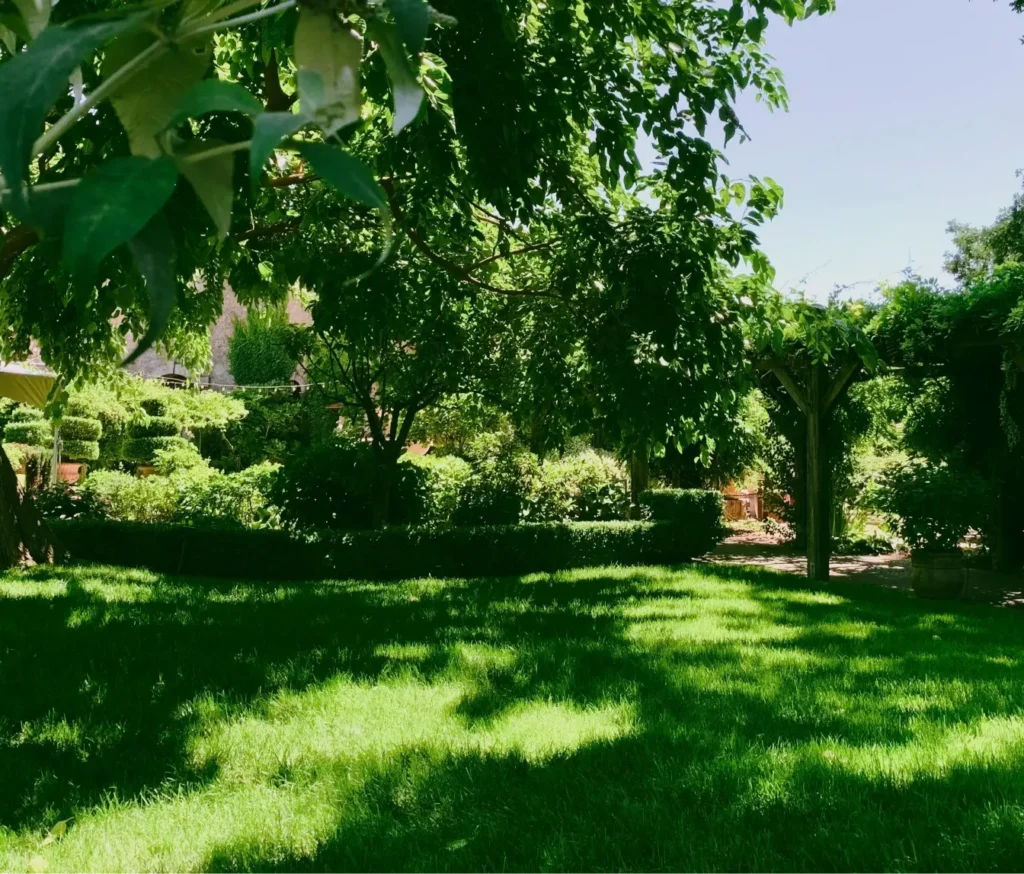
How Landscape Design Creates a Cooler Backyard
Professional landscape design helps create a cooler backyard by planning the right materials, proper shade, planting, airflow, and layout around your property and how much sun it actually gets. The process makes sure outdoor elements like shade, hardscaping, and planting are planned together as connected parts, rather than added on separately.
On the South Shore, every community faces its own landscape conditions and heat exposure, so keeping a patio cool takes a different approach in each one. A sunny coastal yard in Marshfield may benefit from overhead shade and a planting bed designed around local wind exposure. A wooded property in Norwell may already have mature trees, but the patio should be built to work around roots, a shifting canopy, and pockets of strong afternoon sun.
JRD Landscape Design looks at your whole space and plans your patio around how the entire yard works together. We consider the daily sun movement, your yard size and orientation, and any existing trees and canopy, and we carefully select a paving color and finish that complements the space and keeps the surface cooler. We also plan around air circulation, views and privacy, dining and gathering patterns, and how your patio connects to the walkway, lawn, and the rest of your home.
What is the best patio material for summer?
The best patio materials for summer are lighter, less dense materials like limestone, or any light-colored pavers. These materials have the ability to reflect sunlight and hold less heat over time, keeping the surface less hot. A material’s color, finish, shade, durability, and maintenance helps guide the final selection.
Do I need to replace my whole patio to fix the heat problem?
Not always. In most cases, adding shade or adjusting the layout around your current patio makes a real difference in comfort without a full rebuild. Planting trees, adding a pergola or pavilion, choosing lighter materials, and expanding planting beds can work together to make your patio and the surrounding yard cooler.
Why does my patio stay hot even after the sun goes down?
A patio absorbs and holds heat longer than grass, soil, and planted areas. Dense materials like concrete and bluestone soak up heat all day and release it slowly, which is why the surface can stay warm well into the evening.
Is travertine cooler than concrete?
Yes, in most cases. Travertine is usually lighter in color and less dense than standard concrete, so it reflects more sunlight and holds less heat during the day. That keeps the surface more comfortable underfoot. Concrete can be cooled with a lighter finish or added shade, but travertine tends to start cooler on its own.
Can trees really make my backyard cooler?
Yes. Trees can lower surface temperatures with their shade and help cool the nearby air through evapotranspiration, the process of releasing water vapor through their leaves. How much they help depends on canopy size, placement, species, and how much of the patio or hardscape they shade from direct sun.
Do walkways get as hot as patios?
They can. Walkways are hardscape too, so a dark, dense path in full sun heats up much like a patio. Lighter stone and shaded routes stay more comfortable underfoot, which matters on the barefoot walk to a pool or patio. Our stone walkways are built with material and placement in mind for exactly that reason.
Hot Patio and Cooler Backyard FAQs
What is the best patio material for summer?
The best patio materials for summer are lighter, less dense materials like limestone, or any light-colored pavers. These materials have the ability to reflect sunlight and hold less heat over time, keeping the surface less hot. A material’s color, finish, shade, durability, and maintenance helps guide the final selection.
Do I need to replace my whole patio to fix the heat problem?
Not always. In most cases, adding shade or adjusting the layout around your current patio makes a real difference in comfort without a full rebuild. Planting trees, adding a pergola or pavilion, choosing lighter materials, and expanding planting beds can work together to make your patio and the surrounding yard cooler.
Why does my patio stay hot even after the sun goes down?
A patio absorbs and holds heat longer than grass, soil, and planted areas. Dense materials like concrete and bluestone soak up heat all day and release it slowly, which is why the surface can stay warm well into the evening.
Is travertine cooler than concrete?
Yes, in most cases. Travertine is usually lighter in color and less dense than standard concrete, so it reflects more sunlight and holds less heat during the day. That keeps the surface more comfortable underfoot. Concrete can be cooled with a lighter finish or added shade, but travertine tends to start cooler on its own.
Can trees really make my backyard cooler?
Yes. Trees can lower surface temperatures with their shade and help cool the nearby air through evapotranspiration, the process of releasing water vapor through their leaves. How much they help depends on canopy size, placement, species, and how much of the patio or hardscape they shade from direct sun.
Do walkways get as hot as patios?
They can. Walkways are hardscape too, so a dark, dense path in full sun heats up much like a patio. Lighter stone and shaded routes stay more comfortable underfoot, which matters on the barefoot walk to a pool or patio. Our stone walkways are built with material and placement in mind for exactly that reason.
Plan a More Comfortable Patio for South Shore Summers
A cooler backyard comes down to clear design choices: the right materials, proper shade over the spots that bake in direct sun, and a layout that lets natural airflow move through. JRD Landscape Design helps South Shore homeowners design and build a cohesive outdoor patio that balances character with comfort.
Contact our team to schedule an on-site consultation. Let’s talk about how a well-planned landscape can make your backyard more usable and more fun all summer long.