
When you’re weighing a deck vs patio for your backyard, the decision shapes how the entire space looks, feels, and functions. Both create inviting areas for relaxing, dining, and entertaining, but each one opens up different design possibilities depending on your home, your yard, and how you actually want to use the space.
The choice isn’t only about materials. It’s about flow, elevation, and how the space connects to everything around it. At JRD Landscape Design, we guide homeowners across the South Shore of Massachusetts through this decision based on lifestyle, design vision, and how the space will fit into the rest of the property. New England yards bring their own factors into the mix, from sloped lots to seasonal weather, and those details often shape the right answer.
What is the Difference Between a Patio and a Deck?
The main difference between a deck and a patio comes down to elevation, structure, and how each one connects to your home. A patio sits at ground level and integrates with the surrounding landscape. A deck is an elevated structure attached to the home and supported by a framing system.
Here’s a quick side-by-side look at how a deck and patio compare:
| Feature | Patio | Deck |
| Elevation | Ground level | Raised, attached to home |
| Common Materials | Concrete, pavers, natural stone | Wood composite, PVC |
| Foundation | Compacted base, sits on ground | Footings and framing systems |
| Best For | Flat or gently graded yards | Sloped lots, elevated home entries |
| Visual Feel | Grounded, blends with landscape | Defined, structured, elevated |
| Maintenance | Lower, occasional cleaning and joint | Higher, sealing, refinishing, inspections |
The difference between a patio vs deck for your backyard goes beyond materials. Elevation, structure, and how each one transitions to the rest of the yard all influence drainage, layout, and how the finished space actually feels. That’s why a design-first approach matters from the start.
What to Consider When Choosing a Deck vs Patio
The right choice for your backyard depends on more than appearance. Performance, maintenance, long-term value, and visual impact all shape how the space holds up and how it fits into your property. For homeowners across New England, where weather and terrain add another layer to the decision, these factors carry even more weight when planning a complete outdoor living space.
Performance and Durability
A well-built patio typically holds up better over the long run than a deck, especially in a freeze-thaw climate like Massachusetts. Patios sit on a compacted base, which means fewer structural points to fail and less wear from seasonal shifts. As long as the base is prepared correctly and drainage is planned from the start, a patio handles heavy use, snow, and changing weather with minimal issues.
A deck is structurally sound when built right, but the framing, fasteners, and surface materials are exposed to moisture and weather year-round. Wood decks in particular can shift, fade, or weaken over time without consistent care. Composite and PVC options hold up better, but no deck is truly maintenance-free. How each option performs over the next 10 to 20 years often matters more than how it looks on day one.
Common Issues and Maintenance
Maintenance is one of the biggest long-term differences between a patio vs deck for your backyard. Patios generally need less ongoing attention than decks. The most common patio issues, like surface cracks or minor shifting, usually trace back to poor base preparation or drainage rather than the patio itself.
Decks need more consistent care to stay safe and looking sharp. Wood decks should be sealed or refinished on a regular schedule, while composite decks need cleaning to prevent buildup. Fasteners, railings, and framing also need an annual inspection, especially after a hard New England winter.
Both options reward quality installation, but a deck simply demands more attention over its lifespan. The same is true for visual impact and long-term value, which often come down to how the space is designed from the start.
Value and Investment
A patio often comes in at a lower upfront cost and delivers strong long-term value through durability and minimal upkeep. A deck typically costs more to install and more to maintain, but it can add a stronger architectural feature to homes with elevated entries or sloped lots, which can support resale value in the right setting.
The smarter way to compare a deck vs patio for your backyard is to look at total cost across 10 to 20 years rather than only the install price. Both options can be a strong investment when the design fits the home and the build quality is there from the start.
Overall Visual Impact
Visual impact is where this decision really comes down to design intent. A patio creates a grounded, integrated look that flows with garden beds, walkways, and the rest of the landscape, while a deck adds elevation, clean lines, and a defined outdoor zone that pairs well with raised home entries or scenic backyards. In some cases, the strongest visual outcome comes from combining both. When the visual goal is matched to the right structure from the start, the finished space feels intentional rather than added on later.
Performance, maintenance, value, and visual impact rarely point to one obvious answer on their own. The right call usually comes from looking at how all four work together for your specific home, your yard, and the way you actually want to live in the space.
Patio vs Deck: Pros and Cons for Your Backyard
Every outdoor space comes with tradeoffs, and a deck and patio are no different. Looking at the strengths and limitations of each side by side helps homeowners make a confident decision based on how the space will actually function, not just how it looks in a photo.
Patio Pros and Cons
A patio is often the right call for homeowners who want a grounded, low-maintenance outdoor space that flows with the rest of the landscape.
Pros
- Strong long-term durability with minimal upkeep
- Seamless integration with garden beds, walkways, and yard features
- Stable, level surface ideal for outdoor dining and entertaining
- Flexible design options across pavers, natural stone, and concrete
Cons
- Less ideal for steeply sloped or uneven yards without grading work
- Limited elevation, which can reduce sightlines on flat properties
Deck Pros and Cons
A deck makes more sense for homes with raised entries, sloped lots, or scenic views that benefit from elevation.
Pros
- Works well on sloped or uneven terrain where a patio would need extensive grading
- Adds height that highlights backyard views and creates a defined outdoor zone
- Connects directly to the home, often extending indoor living space outward
- Can support resale value, especially for elevated or architectural homes
Cons
- Higher long-term maintenance, including sealing, refinishing, and inspections
- More vulnerable to moisture, weather wear, and structural shifts over time
In some cases, the strongest result isn’t picking one over the other. The JRD Landscape Design team helps homeowners weigh these tradeoffs against the home, the yard, and the way the space will actually be used, so the final choice fits the property from the start.
When Does a Combined Patio and Deck Layout Make Sense?
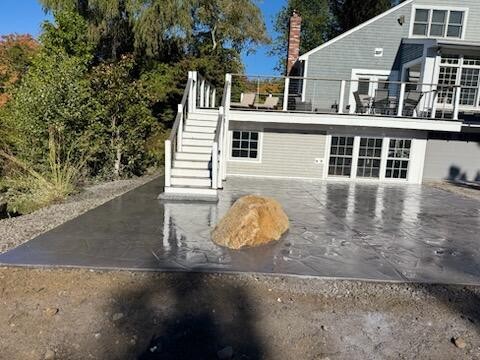
For some homes, the best answer isn’t choosing a deck or patio at all. It’s combining both into one cohesive outdoor space that uses each option for what it does best.
A common approach starts with a raised deck connected directly to the home, often used as a dining area off the kitchen or living room. Stairs lead down to a ground-level patio, where homeowners can add an outdoor firepit, lounge seating, or a separate entertaining zone. When the deck, patio, stairs, retaining walls, and landscaping are designed together from the start, the result feels like one connected space instead of two features placed near each other.
Combined layouts also make a lot of sense on sloped lots, which are common across the South Shore of Massachusetts. The raised deck handles the elevation, the patio anchors the lower yard, and the transitions in between turn what could feel like wasted space into a usable, design-driven feature. With professional planning and execution, the finished space supports how the family actually uses the yard rather than just adding more square footage.
Why Professional Design Matters in Your Outdoor Living Space?
Choosing the right outdoor space gets easier when you start from a design-first perspective. The decision between a patio vs deck for your backyard is less about which one looks nicer in a photo and more about how you’ll use the space and move through it every day.
An experienced design-build team looks at the full picture before recommending a single material or layout. That means evaluating how the space connects to the home, how it functions for the way you actually live, and how it fits into the broader landscape.
A few things a strong design process accounts for:
- Home layout and connection points
- Grading, drainage, and elevation
- Traffic flow between indoor and outdoor spaces
- Material selection based on use and climate
- Long-term maintenance and durability
JRD Landscape Design takes a design-build approach to every project, evaluating layout, flow, and material choices before any work begins. Starting with the design rather than the build is what creates outdoor spaces that actually function the way homeowners want them to.
How to Decide Between a Deck and a Patio for Your Backyard
There’s no one-size-fits-all answer when choosing a deck vs patio for your backyard. The right call usually comes down to a few key questions about your property and how you plan to use the space.
Start by looking at:
- Terrain and grade
- How you’ll use the space
- Connection to the home
- Long-term goals
Flat or gently sloped yards tend to favor patios, while steeply sloped or raised lots often work better with a deck. Quiet lounging and garden integration lean toward a patio, while entertaining, dining, and elevated views often lean toward a deck. Decks attach directly to the home and extend indoor living outward, while patios sit independently and tie into the broader landscape. And if low maintenance and durability matter most, a patio usually wins. If architectural impact and elevation matter more, a deck has the edge.
Our team approaches each outdoor patio or deck project with a design-first mindset. That means looking at how the space connects to your home, fits your lifestyle, and works with the existing landscape before we recommend materials or layout.
Patio vs Deck FAQs
What is cheaper, a patio or a deck?
A patio is usually the more affordable option upfront, especially when built on level ground. Decks cost more because of framing, footings, and railing requirements, but the full cost depends on materials, layout, and site conditions.
Which lasts longer, a patio or a deck?
Patios generally last longer with less upkeep, often 25 years or more for stone, concrete, and pavers. Decks typically last 15 to 25 years depending on the material, with composite outlasting wood when both are maintained well.
Do I need a permit when adding a patio or a deck in Massachusetts?
Yes, most homeowners need a permit to add a deck or patio over 200 square feet. Permits ensure the project meets the Massachusetts State Building Code for safety, structural integrity, and zoning. Requirements can vary by town, so it’s worth confirming local rules before construction begins. Experienced contractors typically handle the permit process as part of the project.
Is a deck or patio better for a sloped backyard?
A deck is usually the stronger fit. The framing system handles elevation without major grading, while patios on slopes often need retaining walls or significant site work. Combined deck-and-patio layouts work especially well on properties with mixed terrain.
Can a deck and patio be designed together?
Yes, and it’s often the strongest solution for backyards with multiple use zones or elevation changes. A raised deck handles dining and indoor connection, while a lower patio anchors features like a firepit or lounge area. When the two are planned together by a landscape design team rather than added in stages, the transitions feel intentional and the finished space works as one cohesive environment.
What is cheaper, a patio or a deck?
A patio is usually the more affordable option upfront, especially when built on level ground. Decks cost more because of framing, footings, and railing requirements, but the full cost depends on materials, layout, and site conditions.
Which lasts longer, a patio or a deck?
Patios generally last longer with less upkeep, often 25 years or more for stone, concrete, and pavers. Decks typically last 15 to 25 years depending on the material, with composite outlasting wood when both are maintained well.
Do I need a permit when adding a patio or a deck in Massachusetts?
Yes, most homeowners need a permit to add a deck or patio over 200 square feet. Permits ensure the project meets the Massachusetts State Building Code for safety, structural integrity, and zoning. Requirements can vary by town, so it’s worth confirming local rules before construction begins. Experienced contractors typically handle the permit process as part of the project.
Is a deck or patio better for a sloped backyard?
A deck is usually the stronger fit. The framing system handles elevation without major grading, while patios on slopes often need retaining walls or significant site work. Combined deck-and-patio layouts work especially well on properties with mixed terrain.
Can a deck and patio be designed together?
Yes, and it’s often the strongest solution for backyards with multiple use zones or elevation changes. A raised deck handles dining and indoor connection, while a lower patio anchors features like a firepit or lounge area. When the two are planned together by a landscape design team rather than added in stages, the transitions feel intentional and the finished space works as one cohesive environment.
Let’s Design the Right Outdoor Space For Your Home
Choosing between a deck vs patio for your backyard is bigger than picking a material or a price point. It comes down to how the space functions, how it connects to your home, and whether the finished result feels intentional or added on. A thoughtful design brings structure, flow, and long-term value together so your outdoor space actually fits the way you live.
If you’re ready to start planning, JRD Landscape Design is here to walk through your property, your goals, and the right path forward. Get in touch to talk through your project.