
TL;DR
Hardscape covers the constructed, non-living outdoor features in the yard, including patios, walkways, steps, and retaining walls.
Softscape includes living elements in the yard, such as trees, shrubs, flowers, ornamental grasses, and lawn.
A successful yard design plans for both concepts together. It keeps the structure, planting, drainage, movement, and New England’s climate factored in.
Maybe last year you added a patio and this spring you filled in a few garden beds. Both can look fine on their own, but this can make the yard feel like it has two separate projects combined, not one finished space. That disconnect happens when individual outdoor features are selected without planning how they will connect with the rest of your property.
Understanding hardscape vs softscape planning is a useful starting point. Hardscape lets you establish the structure and usable areas of your yard, while softscape adds life, texture, shade, and seasonal change. The best landscape results come from treating them as connected parts, rather than separate projects.
JRD Landscape Design explains how hardscape and softscape differ, how they work together, and what South Shore homeowners should consider when planning a complete outdoor space.
What Is the Difference Between Hardscape and Softscape?
Hardscape refers to the non-living, constructed materials and features in a yard. It includes patios, walkways, retaining walls, driveways, and fire features. These features are typically made from stone, concrete, brick, or wood, and they shape the physical structure of the yard.
Softscape refers to the living, growing elements of a landscape. Lawn, trees, shrubs, perennial beds, trees, flowers, grasses, and groundcover all count as softscape. Unlike hardscape, softscape features change with the seasons and require ongoing care to stay healthy and full.
Here’s a closer look at the main difference between hardscape and softscape:
| Factor | Hardscape | Softscape |
|---|---|---|
| Definition | Constructed, non-living features in the yard. | Living, growing elements in the yard. |
| Common examples | Patios, walkways, walls, steps, driveways, and fire pit areas. | Trees, shrubs, flowers, grasses, groundcover, and lawn. |
| Primary purpose | Creates yard layout, fixed structure, access, gathering areas, and land grading. | Adds shade, privacy, color, texture, proper airflow, and seasonal interest. |
| Structure | Fixed and stays in place once installed. | Grows and shifts over time. |
| Maintenance | Low upkeep and mostly requires occasional cleaning, joint care, sealing, or repairs. | Requires regular upkeep including watering, pruning, mowing, feeding, and seasonal care. |
| Upfront Cost | Generally higher, due to materials and contractor labor. | Generally lower and can be maintained by homeowners. |
Neither hardscape nor softscape is a “better” option. A yard that is heavily built with one concept can end up looking incomplete, either too stark or too unstructured. Finding the balance between hardscaping and softscaping gives your property a balanced landscape.
How Hardscape and Softscape Work Together
A thoughtful yard is created through connecting outdoor features. Each patio, walkway, wall, tree, and planting bed should complement the same layout, not compete for attention.
Hardscape Gives Your Yard Structure
Hardscape gives your yard its shape and layout. It defines where your guests can walk, sit, and gather, while also directing how the space flows from one area to the next.
More than structure, hardscape also brings functionality during New England’s harsh seasons. On sloped properties, yard features like retaining walls can also manage property drainage and help prevent erosion, which matters especially during freeze-thaw winters.
Here are a few other roles that hardscape typically plays:
- Defines outdoor spaces, such as a dining patio or a fire pit gathering area.
- Helps direct movement between different parts of the yard.
- Helps manage elevation changes, making sloped or uneven areas safer and easier to use.
- Manages drainage so it won’t be a bigger problem on your property.
This is why JRD Landscape Design handles professional hardscaping as the starting point for most outdoor projects. Once the yard’s structural layer is in place, all the next features in the design have a solid foundation to build around.
Softscape Breathes Life into Your Yard
Softscape makes the yard structure feel comfortable and more connected to the rest of the property. Once the structure is set, softscape’s living elements make a yard feel warm and lived-in, not just purely functional.
Softscape typically:
- Softens your yard’s hard surfaces and adds texture.
- Creates shade and privacy during seasonal gatherings.
- Adds color, movement, and seasonal change throughout the year.
- Helps the finished space feel more complete.
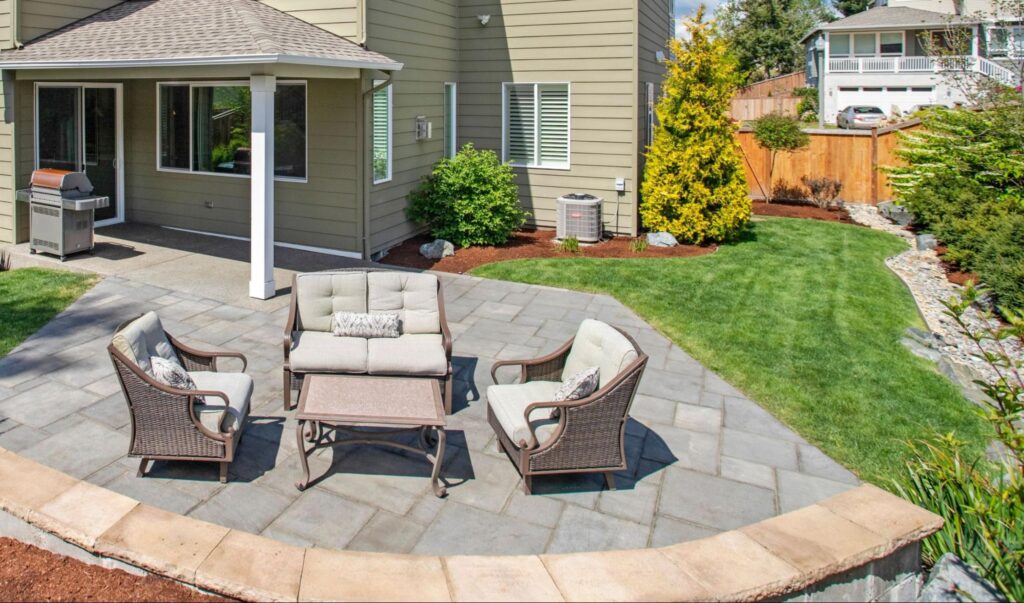
When hardscape and softscape are planned together, your yard reads as a single, connected space. The patio does not look fastened onto the lawn, and the planting beds do not look like a last minute addition around the walkway. Each outdoor element feels more intentional, and together they support how you actually plan to use your yard.
How to Find the Right Hardscape-to-Softscape Balance
There is no single hardscape vs softscape ratio that works for every property. Most well-balanced outdoor spaces land between 40 percent hardscape and 60 percent softscape, with more constructed features added for properties who plan seasonal entertaining or outdoor cooking.
Smaller lots can lean toward hardscape to make the space more usable, while larger properties can support more lawn and plant beds without the space feeling too empty. Here are some factors to consider in finding the right balance for your yard:
- Existing property size, slope, and shape.
- How you plan to use your yard.
- Existing trees and natural green features.
- Sun and shade conditions.
- Drainage and land grading.
- Desired maintenance level.
- Privacy and movement needs.
- Architectural style of your home.
The right balance also depends on giving each outdoor area a purpose. Each hardscape built should support how your yard is used, while each softscape planting should add comfort, scale, movement, or visual impact.
Planning Hardscape and Softscape for a New England Yard
In New England, hardscape and softscape elements should also respond to local climate conditions. The region’s freeze-thaw cycles, snowmelt, heavy rain, changing temperatures, and four distinct seasons all affect how your landscape performs and how it should be planned.
Materials and Base Preparation
Hardscape materials should also match your home and lot setting. Natural stone may complement a traditional South Shore property, while concrete pavers can bring more color and pattern.
The best material combines durability, maintenance, scale, and how it will suit your home and natural planting. Repeated freeze-thaw cycles can cause pavers to move over time, which makes proper digging, ground preparation, and drainage important factors for a yard’s long-term performance. For plant and landscape guidance suited to South Shore conditions, UMass Extension’s Landscape Program is a useful regional resource.
Drainage and Erosion
Hardscape can change how water moves through your property. Patios, walkways, walls, and driveways should be planned with land grading and drainage to keep rainwater and snowmelt away from built structures so it doesn’t collect in low-sloped areas.
Softscape also supports this water-management plan. Planting beds, groundcover, and appropriate shrubs help stabilize the ground and reduce erosion. On some properties, permeable paving that allows stormwater to drain through its surface or planting areas can also help manage water runoff. These elements work best when water movement is planned across the whole yard, rather than addressed in one area at a time.
Four-Season Structure
A South Shore landscape that looks and feels refreshing includes more than just summer flowers. Evergreens, ornamental grasses, textured bark, and durable hardscape help maintain floral aesthetics during New England’s fall and winter seasons.
Your patio, walkways, retaining walls, and other constructed spaces can be more visible when shedding plants lose their leaves. Thoughtful hardscape planning helps make sure the yard still feels structured and well-built, while softscape elements like spring bulbs, summer flowers, fall foliage, and winter greenery provide seasonal color throughout the year.
Complete Landscape Design Prevents a Piecemeal Result
Individual landscape elements can be attractive on their own but can feel misplaced without a broader plan. Planting beds can look displaced with the patio. A walkway can be built when there is no clear destination. Plantings can eventually crowd a seating area or block a view.
Professional landscape design looks at your whole property first, before determining where hardscape and softscape features belong. The planning process considers layout and movement flow, scale, material connections, planting growth, drainage, views from the home, installation order, and long-term upkeep.
JRD Landscape Design brings a design-forward, full-service approach to outdoor living projects across the South Shore. Rather than treating hardscape vs. softscape as two separate enhancements, the team plans how both elements will work as one connected yard. That coordination supports a more functional layout, a more cohesive appearance, and a finished outdoor space that feels intentional from every angle.
Hardscape vs Softscape FAQs
Which should I install first, hardscape or softscape?
Hardscape is usually installed first. Structural features like patios, walkways, and walls need to be graded and built before planting beds are placed around them. Installing softscape first can mean redoing landscaping after construction equipment and materials are moved to the site.
Does hardscaping or softscaping add more value to a home?
Both hardscaping and softscaping add value to a property. According to the National Association of Realtors' 2023 Remodeling Impact Report: Outdoor Features, a new patio can recover about 95 percent of its cost at resale, and an overall landscape upgrade recovers about 100 percent while routine lawn maintenance returns more. In practice, a well-planned mix of both outdoor elements tends to perform better than just including one.
Is hardscape more expensive than softscape?
Hardscape can have a higher upfront cost because it involves construction labor, site preparation, and durable hardscape materials like stone, concrete, brick, or wood. Softscape can cost less initially, but living elements need ongoing care and will need replacement when seasonal conditions or planting needs change over time.
Is mulch hardscape or softscape?
Mulch is classified as softscape because it is commonly used within planting areas and supports living landscape elements. Organic mulch also breaks down over time and contributes organic material to the soil, even though the mulch itself is not a living plant.
Is a retaining wall hardscape or softscape?
A retaining wall is considered a hardscape. It is a constructed outdoor feature usually made from stone, concrete block, brick, timber, or a separate durable material. Retaining walls can also manage slopes and soil erosion while creating planting areas and visual structure.
Which should I install first, hardscape or softscape?
Hardscape is usually installed first. Structural features like patios, walkways, and walls need to be graded and built before planting beds are placed around them. Installing softscape first can mean redoing landscaping after construction equipment and materials are moved to the site.
Does hardscaping or softscaping add more value to a home?
Both hardscaping and softscaping add value to a property. According to the National Association of Realtors’ 2023 Remodeling Impact Report: Outdoor Features, a new patio can recover about 95 percent of its cost at resale, and an overall landscape upgrade recovers about 100 percent while routine lawn maintenance returns more. In practice, a well-planned mix of both outdoor elements tends to perform better than just including one.
Is hardscape more expensive than softscape?
Hardscape can have a higher upfront cost because it involves construction labor, site preparation, and durable hardscape materials like stone, concrete, brick, or wood. Softscape can cost less initially, but living elements need ongoing care and will need replacement when seasonal conditions or planting needs change over time.
Is mulch hardscape or softscape?
Mulch is classified as softscape because it is commonly used within planting areas and supports living landscape elements. Organic mulch also breaks down over time and contributes organic material to the soil, even though the mulch itself is not a living plant.
Is a retaining wall hardscape or softscape?
A retaining wall is considered a hardscape. It is a constructed outdoor feature usually made from stone, concrete block, brick, timber, or a separate durable material. Retaining walls can also manage slopes and soil erosion while creating planting areas and visual structure.
Bring Your Whole Yard Into One Clear Plan
A yard works best when both hardscape and softscape are added into one plan instead of two separate projects. Hardscape gives the space its shape, and the planting fills it with color, texture, and life that make it feel finished. When planned as one and built with New England’s climate in mind, both elements create an outdoor space that holds up and feels connected for years to come.
JRD Landscape Design can help you plan what a cohesive yard could look like for your property.