
Outdoor Spaces Built for Scituate’s Wet Ground
Plenty of Scituate yards look finished their first summer, then show it after one wet winter. A patio settles at the corners, a walkway heaves where the ground stayed soggy, and joints pull apart after a few freeze-thaw cycles. Near the water, salt air and a seasonally high water table work on a yard all year, and the loose, sandy ground close to the beaches behaves nothing like the denser soil farther inland.
Scituate, MA landscape construction is what keeps those problems from starting. It means planning the grading, drainage, and base work around how your specific lot drains and freezes, not dropping in features and hoping they hold. JRD Landscape Design is a design-build team, so the people who plan your patio, walkway, or full outdoor living space are the same ones who build it. That continuity is how a yard ends up looking right and staying put through Scituate winters.
Start With a Plan Built Around Your Property
The outdoor spaces that hold up year after year are the ones planned around the property first: how it drains, where it freezes, and how you want to use it. Reach out for a consultation and we will walk your site before anything gets designed.
What Does Landscape Construction Involve on a Scituate Property?
Landscape construction is the structural side of an outdoor project: the grading, drainage, and base work that go in before any stone does, plus the hardscape features that shape how the yard gets used. On a Scituate lot that usually means patios, stone walkways, retaining walls, and outdoor kitchens or firepits, all set on a base engineered for coastal ground that stays wet longer and shifts with each freeze-thaw cycle. Built as one connected landscape construction plan instead of a feature here and a feature there, the pieces line up, drain the right way, and hold their shape year after year.
The difference isn’t the stone on top. It’s the planning and the base underneath.
That matters more near the coast than almost anywhere else. When grading and drainage are designed around how a specific Scituate property actually sheds water, patios stay level, walls stay plumb, and walkways stop heaving after a hard winter, which is exactly where a rushed build tends to fail first.
Popular Outdoor Improvements for Scituate Homeowners
JRD Landscape Design builds the full range of features that make up a Scituate landscape construction project. Which ones your property needs comes down to its terrain, how it drains, and how you want to use the space.
- Patio Construction: A paver or natural stone patio set on a base built for ground that holds moisture, so it stays level instead of settling at the corners after a wet winter.
- Stone Walkway Installation: Durable paths that connect the drive, entry, and yard, set deep enough to resist the heaving that loose coastal soil causes as it freezes and thaws.
- Hardscape Design and Construction: The edges, borders, steps, and structural stonework that frame a yard and give it definition, planned to work with your grade rather than fight it.
- Retaining Wall Construction: Walls that hold back sloped or eroding ground, carve out a usable area, and manage how water moves across a coastal lot.
- Outdoor Kitchen Construction: A built-in cooking and gathering space that extends the house outdoors, laid out around how you actually entertain.
- Fire Pit Installation: A fire feature that anchors a seating area and keeps the yard in use well into the cooler South Shore months.
What matters most isn’t which feature you choose, but the order it gets built in. When drainage, grade, and base prep are handled before the first stone goes down, everything above ground has a reason to stay put, which is exactly what a coastal Scituate lot demands.
Not Sure Which Improvements Your Yard Needs?
What Does Good Landscape Construction Actually Prevent on a Coastal Lot?
Near the water in Scituate, the difference between a yard that lasts and one that fails shows up underground, long before it shows on the surface. Building for those conditions from the start is what prevents the common, expensive problems later:
- Standing water and a wet foundation: Grading and drainage designed for Scituate’s high seasonal water table move rain away from the house instead of letting it pool against the foundation or sit under the patio.
- Settling and heaving: A properly compacted base that is built to the right depth keeps patios level and walkways flat through the freeze-thaw cycles that push poorly built hardscape out of place within a season or two.
- Eroding and unusable slopes: Retaining walls hold sloped or shifting ground in place, stop soil from washing downhill in heavy coastal storms, and turn a wasted grade into a level, usable part of the yard.
- Plantings that die in salt air: Layered, salt-tolerant planting and deep-rooted groundcover hold soil, absorb runoff, and actually survive the wind and salt exposure that kill standard landscaping near the shore.
- Space you never end up using: A layout planned around how you move through the yard, where the sun falls, and where the wind comes off the water is what turns a good-looking design into one you use every week.
Handling all of this at the planning stage, before any stone is set, is what separates a build that holds up from one that gets repaired in two years. On a coastal Scituate property, that foresight is the whole job.
Why Scituate Homeowners Trust JRD With a Coastal Build
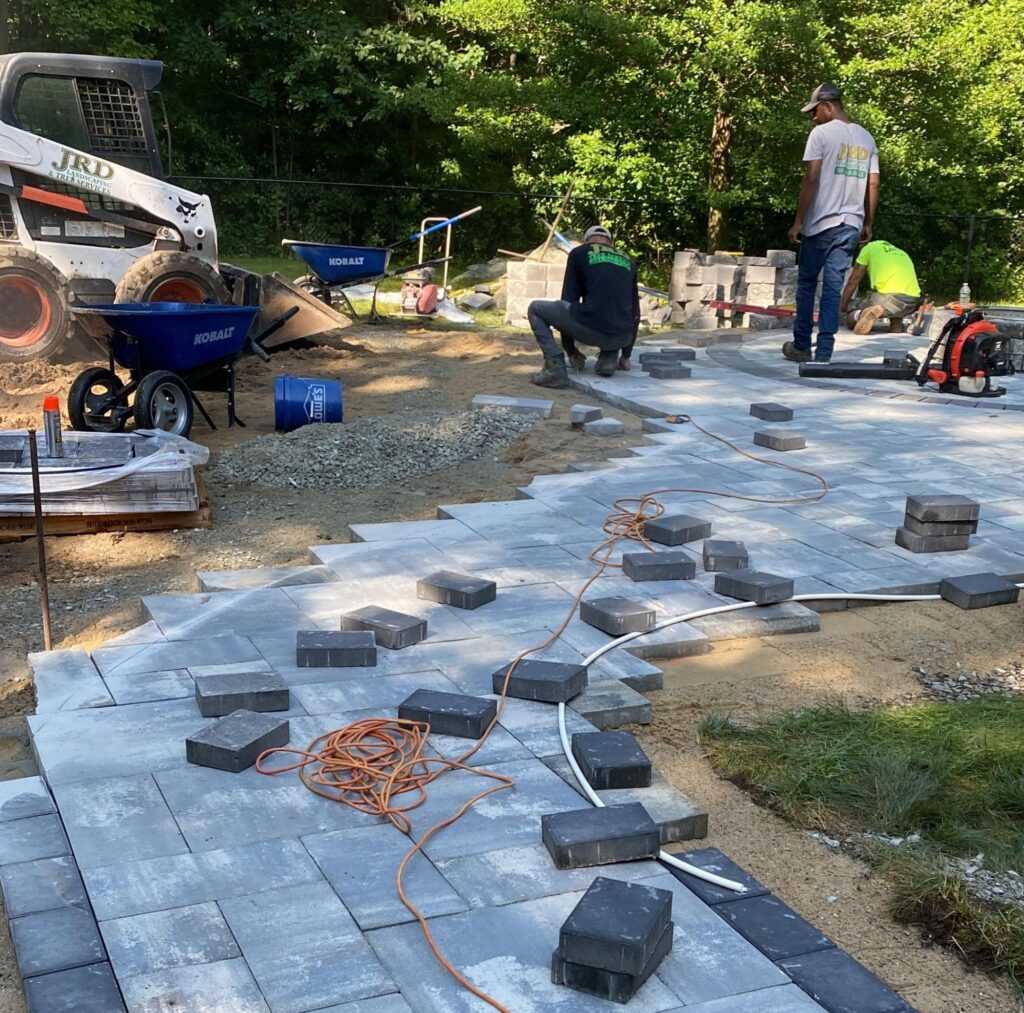
For a project that has to hold up against salt air, storm runoff, and a high water table, the crew you hire matters as much as the materials on the truck. JRD Landscape Design works as a design-build team, so the people who plan your project are the ones who build it, and the plan does not get lost in a handoff. Homeowners tend to point to the same things afterward: clear communication, a schedule that holds, and work that matches what was promised at the start.
That reliability counts for more on a coastal lot, where a rushed or poorly planned build shows its problems fast. We take the time to read how a specific Scituate property drains, freezes, and sits against the weather before recommending an approach, and we walk you through each decision in plain terms so you always know what is happening and why. Whether it is a single patio or a full outdoor renovation, the goal is the same: a space that looks right, works the way you live, and stays that way.
What Scituate Homeowners Say About Working With JRD
Here is what a few homeowners have shared after working with our team.
⭐⭐⭐⭐⭐
“Very impressed. They are professional and do what they say they will do at a very reasonable price. I would definitely use them again.”
Pat B., Verified Customer
⭐⭐⭐⭐⭐
“We’ve used Jose and JRD Landscape multiple times and they’re consistently great. Jose is easy to work with, always on time, and delivers high-quality results. Highly recommend!”
Peter C., Verified Customer
Plan Your Project With a Team Scituate Homeowners Come Back To
Serving Scituate’s Waterfront and Inland Neighborhoods
JRD Landscape Design builds throughout Scituate, and the ground changes a lot from one part of town to the next. Inland neighborhoods like Greenbush, North Scituate, and the areas along Country Way sit on denser soil that drains and settles differently than the coast. Closer to the water, the loose, sandy ground and salt exposure near Minot Beach, North Scituate Beach, and Peggotty Beach call for a different base and planting approach entirely. Knowing which conditions a property actually sits on is what shapes the plan before any work starts.
Our work extends across the surrounding South Shore as well. Scituate borders Marshfield, Norwell, and Hingham, and we handle projects in each for homeowners dealing with their own coastal conditions. We also work with properties in nearby Weymouth and Hanover. That range across the region keeps us fluent in how South Shore weather, soil, and grade behave, so the approach fits the specific property rather than a general area.
Do I need a permit for landscape construction near the water in Scituate?
Often, yes. Work within 100 feet of a wetland, marsh, coastal bank, or the shoreline usually requires a filing with the Scituate Conservation Commission under the Massachusetts Wetlands Protection Act, resulting in an Order of Conditions before building. Additional rare-species review only applies if your lot sits in a mapped habitat area.
How long does a landscape construction project take?
Active build time usually runs 1 to 2 weeks for a single feature and 2 to 4 weeks for a larger installation, depending on size and complexity. Near the water, add lead time before that: permitting through the Conservation Commission can take several weeks, so the smart move is to start planning a few months ahead.
What affects the cost of a coastal landscape construction project?
Cost tracks the site more than the stone. Grading, drainage work, and base prep for a high water table often drive the budget more than the visible materials, along with retaining walls, access for equipment, and how much the existing grade needs correcting. A property walk-through is the only way to price it honestly.
Does landscape construction add value to my home?
A well-built outdoor space can add usable living space and improve curb appeal, which tends to help resale, though the actual return depends on the work, the market, and the home. On the South Shore, features built to handle coastal conditions also hold their value better because they are not failing in a few seasons.
When is the best time of year to build in Scituate?
Spring through late fall is the standard window, with late summer and early fall often ideal, since the ground is workable and stone sets well before winter. Because permitting and scheduling take time near the coast, reaching out in winter or early spring is the best way to secure a build slot for the season.
Scituate, MA Landscape Construction FAQs
Do I need a permit for landscape construction near the water in Scituate?
Often, yes. Work within 100 feet of a wetland, marsh, coastal bank, or the shoreline usually requires a filing with the Scituate Conservation Commission under the Massachusetts Wetlands Protection Act, resulting in an Order of Conditions before building. Additional rare-species review only applies if your lot sits in a mapped habitat area.
How long does a landscape construction project take?
Active build time usually runs 1 to 2 weeks for a single feature and 2 to 4 weeks for a larger installation, depending on size and complexity. Near the water, add lead time before that: permitting through the Conservation Commission can take several weeks, so the smart move is to start planning a few months ahead.
What affects the cost of a coastal landscape construction project?
Cost tracks the site more than the stone. Grading, drainage work, and base prep for a high water table often drive the budget more than the visible materials, along with retaining walls, access for equipment, and how much the existing grade needs correcting. A property walk-through is the only way to price it honestly.
Does landscape construction add value to my home?
A well-built outdoor space can add usable living space and improve curb appeal, which tends to help resale, though the actual return depends on the work, the market, and the home. On the South Shore, features built to handle coastal conditions also hold their value better because they are not failing in a few seasons.
When is the best time of year to build in Scituate?
Spring through late fall is the standard window, with late summer and early fall often ideal, since the ground is workable and stone sets well before winter. Because permitting and scheduling take time near the coast, reaching out in winter or early spring is the best way to secure a build slot for the season.
Ready to Start Your Scituate Landscape Construction Project?
The best builds start with a look at the actual property, not a template. When you are ready, we will walk your site, talk through how you want to use the space, and map out an approach built for how your lot drains, freezes, and sits against the coast.
Reach out to get in touch with our team and start planning a Scituate outdoor space that looks right and holds up for years.